Fact Check:
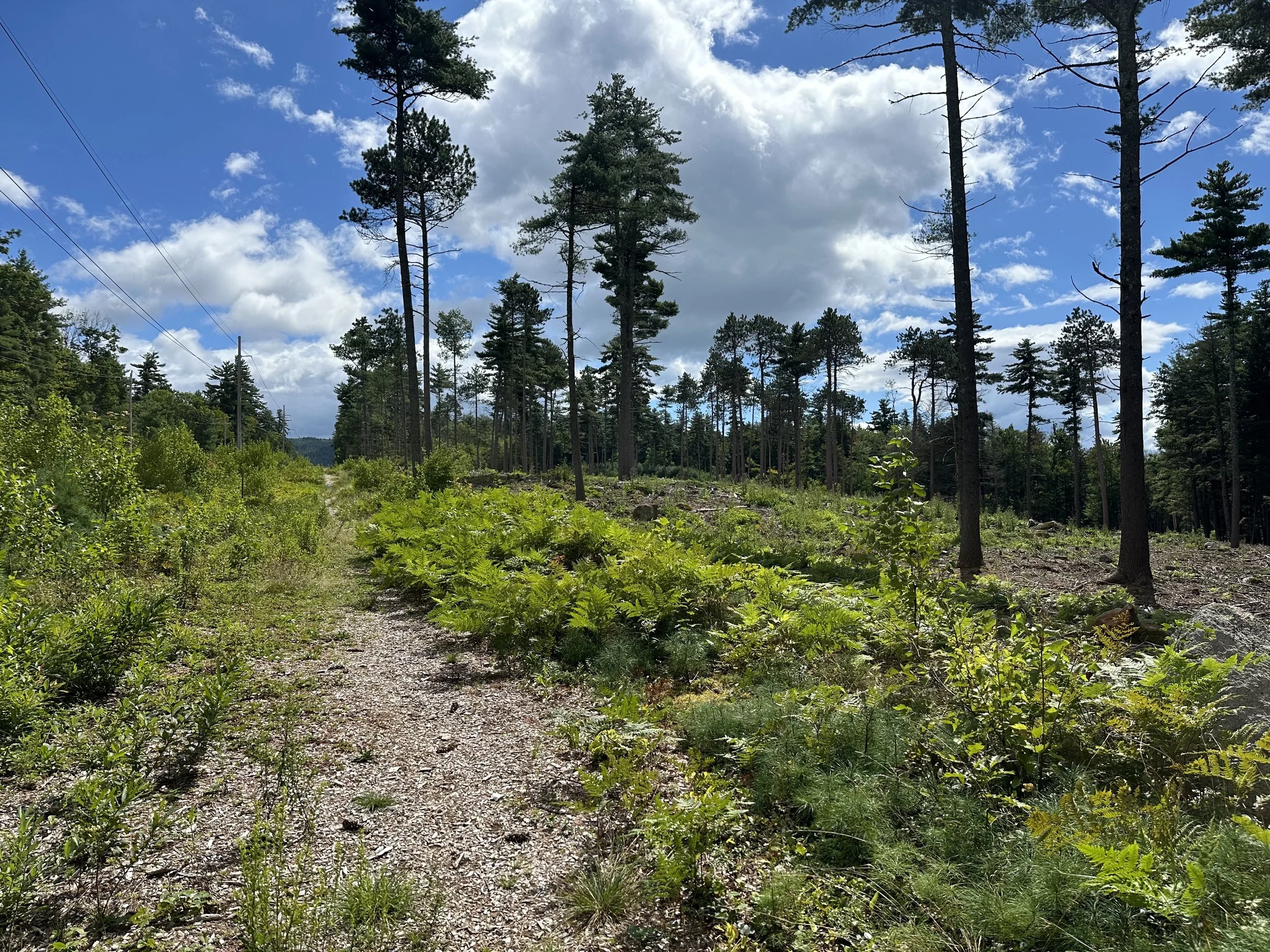
Whitaker Woods Proposed Phase 2 Rec Path

The Original MWVTA “Phase 1” (2014): planned for Bancroft parcel to avoid the sensitive Whitaker Woods deed restrictions.

Page 2 of the original Deed between grantor (Charles “Chubby” Whitaker), and the Town of Conway.
-
Claim: The paved path through Whitaker Woods was first approved in 2014 by the BOS and Conservation Commission.
Fact: False. In 2014–2015, plans focused on the Bancroft parcel and Mountain Division rail corridor. Whitaker Woods was explicitly off-limits due to deed restrictions. The 2015 warrant article expressly avoided language that included “pavement” due to sensitivity of the issue.
-
Claim: The 2015 Town Meeting authorized the Selectmen to apply for grants to construct the path in Whitaker Woods.
False.
At the April 2015 Town Meeting, Article 21 authorized the Board of Selectmen to apply for grant funding for a recreation path along the Bancroft property, located beside Whitaker Woods but not within it. Nothing in that article or its public presentation gave authority to extend the path into Whitaker Woods.Public assurances at the time were clear. Project supporters told voters that the path would not cross into Whitaker Woods and that the route would follow the rail line corridor near the Bancroft parcel. Those representations were central to winning voter support.
Changing the route after voters approved a specific alignment is not a small adjustment. It is a material scope change that affects the legal, environmental, and funding framework of the project. Federal and state grant awards are issued for a defined location, purpose, and design concept. Altering those elements after the fact requires formal amendments, new environmental reviews, and agency re-approval. The Town and the Trails Association have already encountered this difficulty, as evidenced by their repeated statements about the difficulty involved in modifying the Phase 2 grant to allow a different surface treatment.
The 2015 authorization therefore cannot be stretched to cover construction in Whitaker Woods, and any claim to the contrary misrepresents both the intent of the warrant article and the limits of the grant authority that voters approved.
-
Claim: MWVTA obtained funding in 2022 with BOS support, realigning the path to Whitaker Woods.
Fact: Misleading. The 2022 EDA grant ($2.1M) marked the first time Whitaker Woods was included. This was a major scope change, not just a realignment, and was never brought to a town vote nor were the design details shared with the public prior to submitting the grant request.
-
Claim: The final location of the path was set on a site walk with staff, the CCC, and members of the public.
Fact: False. No BOS-sanctioned site walk ever chose Whitaker Woods. The new alignment only appeared at one low-visibility (CCC) meeting in Dec 2023, and one public hearing in May 2024, after 60% design was complete. In fact, until August 2025, the BOS had never voted to approve any aspect of the proposed phase 2 plan.
-
Claim: The deed allows paving because Whitaker Woods trails were already modified for skiing and snowshoeing.
Fact: Misleading. The 1971 deed requires the land remain in a “wild and natural state.” Ski grooming is seasonal and reversible. A paved corridor is a permanent alteration.
-
Claim: Paving continues Chubby Whitaker’s legacy of inclusive access.
Fact: False. Chubby Whitaker’s documented 1971 intent was to preserve the woods forever wild and natural for recreation like walking, skiing, and snowshoeing — not paving. The words inclusive are not included anywhere in the deed document.
-
Claim: “MWVTA has spent more than $450,000 for design to date. If approvals are overturned, the money is lost, along with the $2.2M EDA and $1M NBRC grant promises.”
Fact: Classic Sunk-cost argument. The money already spent does not justify proceeding with an alignment that may be legally invalid or unviable.
Risk of grant loss is exaggerated. Grants often allow re-scoping or reallocation if alignments or details change. This happened during Phase 1 construction.
The real issue is whether Conway is committing to an alignment that violates deed restrictions and exposes the Town to legal and financial risk.